If you’ve been wondering whether you’ve missed the window to learn piano, here’s the direct answer: you haven’t. The “best age” question is more complicated than most people think — and the idea that adults can’t learn piano meaningfully is simply false.<
What the Research Actually Says About Age and Learning Piano
Children do have a genuine advantage in one specific area: neural plasticity. Young brains form new connections more readily, which makes acquiring motor skills — including the physical coordination required for piano — somewhat easier in early childhood. The critical period for this heightened plasticity is roughly ages 3–8 for musical development.
This is real. But “more deeply ingrained” isn’t the same as “the only way to play well.” And for most adults, the question isn’t whether they can become concert pianists — it’s whether they can learn to play music they love. The answer to that question doesn’t change with age.
The Best Age to Start Piano: By Goal
For Concert-Level Classical Performance
Honestly, the earlier the better — ideally before age 10, with consistent formal training throughout childhood and adolescence. Age of starting genuinely matters at this level.
For Recreational Playing and Song-Based Learning
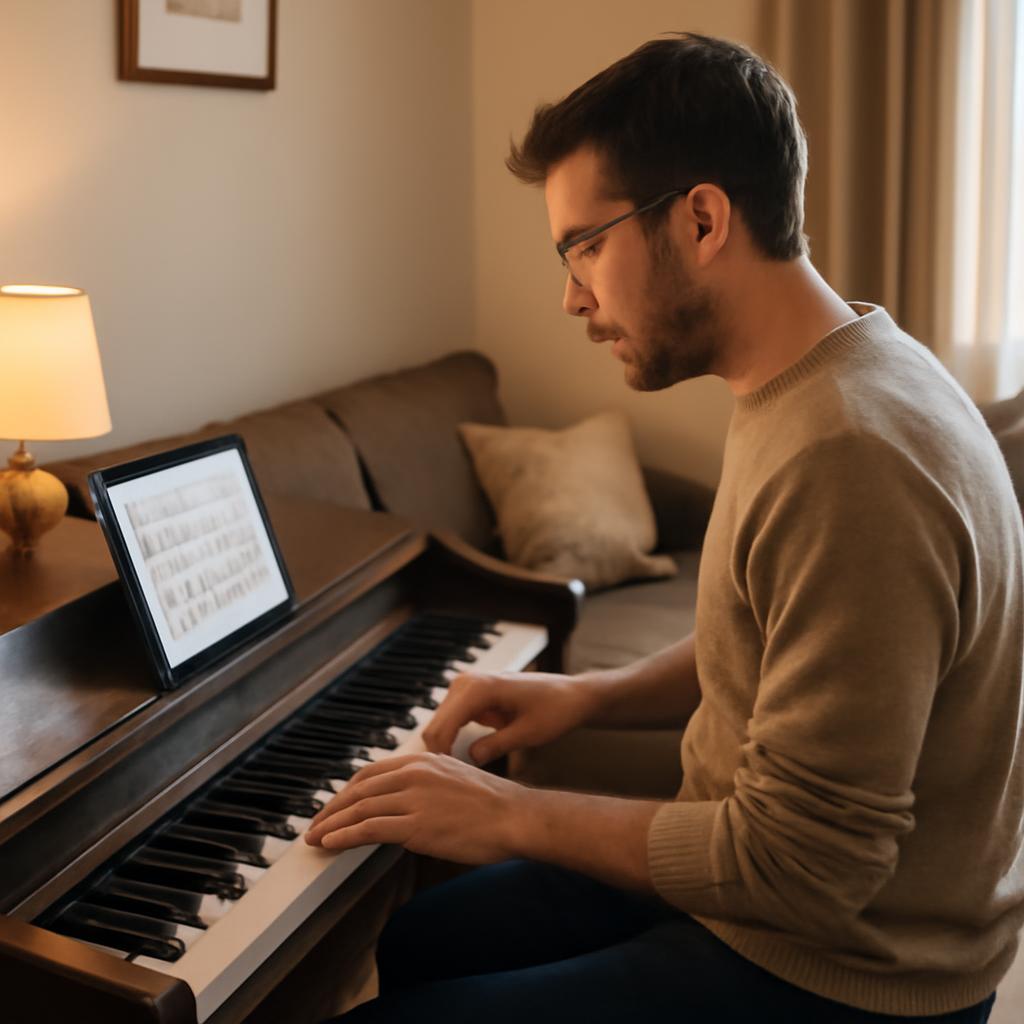
Any age. Adults who start in their 30s, 40s, 50s, and beyond consistently reach the level of playing songs they love. The timeline is somewhat longer than for children, but the destination is absolutely reachable.
For Children Learning as a Foundation
Most music educators suggest 6–7 as an ideal starting point — old enough to sit still and follow instruction, young enough for excellent plasticity.
The Real Advantages Adults Have Over Children
Intrinsic motivation. Adults choose to learn piano. Children are often enrolled by parents. The difference in motivation has a huge effect on how much effort someone naturally puts in.
Musical context. By adulthood, you’ve heard thousands of songs across dozens of genres. This musical intelligence gives you a significant head start.
Abstract understanding. Adults grasp music theory concepts much more quickly than children because they can engage with abstractions that children aren’t developmentally ready for.
Focused practice. Adults can practice deliberately — identify what’s not working, target it specifically, make purposeful improvements. Deliberate practice is the most effective kind.
Frequently Asked Questions
Is 30 too old to learn piano?
No. Thirty is genuinely not too old. Neither is 40, 50, or 60. Adults learn piano successfully all the time. The timeline may be somewhat longer than for a child, but the ability to play music you love is absolutely achievable at any age.
Can adults develop the same piano technique as someone who started as a child?
For most practical purposes, yes. Concert-level virtuosity is affected by early training in ways that are hard to fully compensate for. But for everything below that level — which covers essentially all amateur playing — adult learners can develop excellent technique.
What to read next
- Learning Piano as an Adult: What to Expect
- How Long Does It Take to Learn Piano?
- Can You Teach Yourself Piano?
- Beginner Roadmap: Where to Start
Looking for a comprehensive piano course? Read the comprehensive course we reviewed — 10 eBooks with audio and video for a one-time price.
Disclosure: This post contains affiliate links. If you purchase through our links, we may earn a small commission at no extra cost to you. We only recommend products we genuinely believe in.