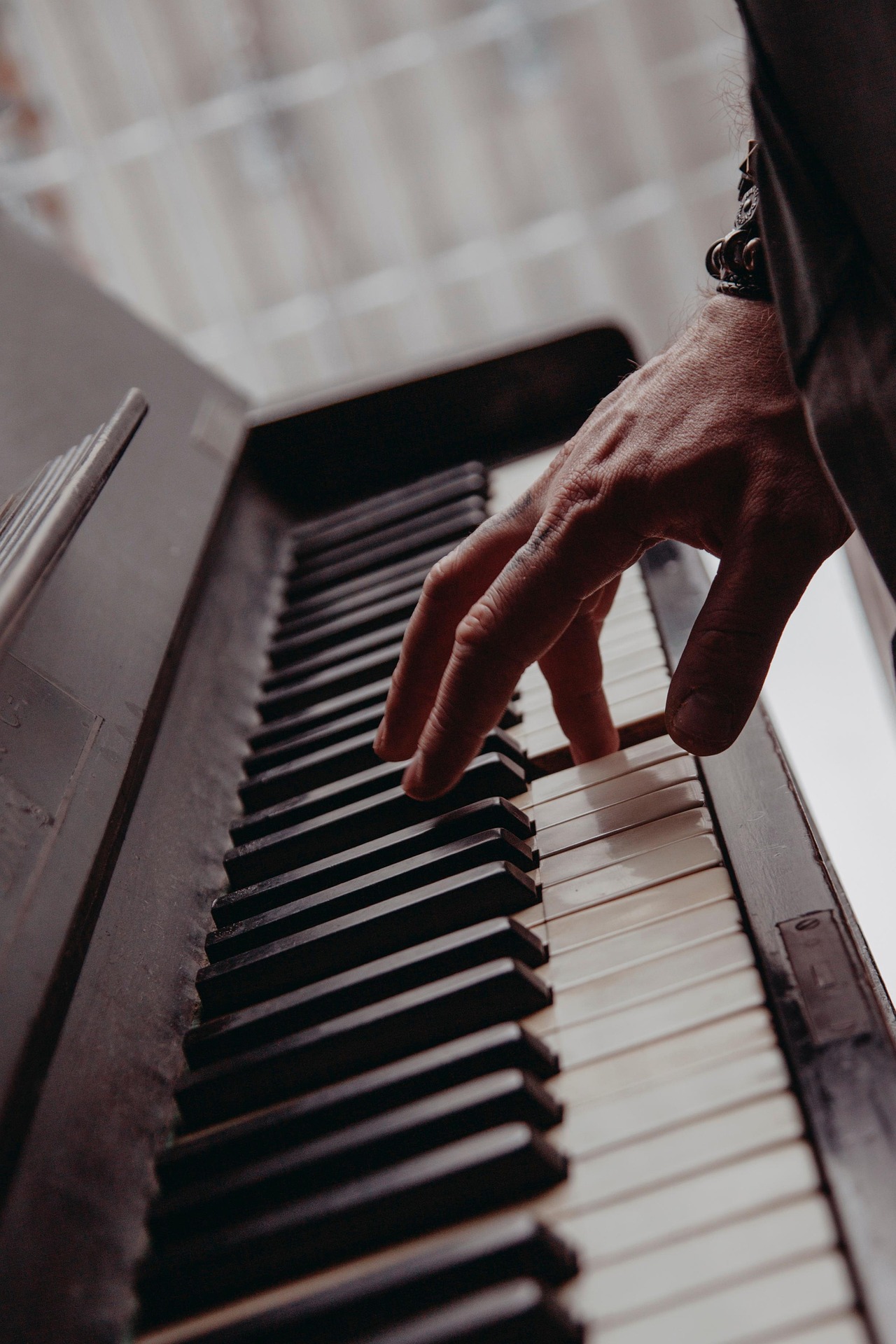
There’s a version of finger exercises that’s genuinely useful, and a version that’s just busy work. The useful version targets specific weaknesses, develops real independence and control, and feeds back into your actual repertoire. Here’s what actually works for beginners — without the hour-long Hanon marathon.
What Finger Exercises Actually Develop
Good finger exercises develop three things: independence (each finger moving without dragging its neighbors), evenness (each finger producing a consistent tone regardless of which one it is), and strength (particularly in the weaker fourth and fifth fingers). Most natural hand movement in daily life uses the first three fingers heavily and the fourth and fifth fingers minimally — piano reverses this balance, which is why exercises that target weak fingers produce disproportionate improvement.


5 Beginner Finger Exercises Worth Your Time
1. Five-Finger Position Scale
Place your hand in C position: thumb on C, fingers on D, E, F, G. Play each note slowly and deliberately — 1-2-3-4-5, then 5-4-3-2-1. Focus on evenness of tone and keeping fingers close to the keys. Lift each finger only just enough to clear the key, no more. Do this with both hands separately, then together.
2. Sustained Note Exercise
Hold down the thumb (C) while playing D, E, F, G with the other fingers. This develops finger independence — the ability to move one finger while others remain still. Then hold the second finger and play the others. Work through each finger as the “anchor.” This is surprisingly difficult at first and extremely valuable for coordination.
3. 1-3-5 Chord Jumping
Play the C major chord (C-E-G) with fingers 1, 3, and 5. Lift and replace the chord cleanly. Then jump to G major (G-B-D). Focus on landing all three notes simultaneously, not sequentially. This develops chord accuracy, which is one of the most practical skills for beginner repertoire.
4. Contrary Motion Scale
Both hands start on middle C and move outward in mirror image — right hand goes up (C-D-E-F-G), left hand goes down (C-B-A-G-F) — then return to center. This exercises both hands symmetrically and develops independent motion that isn’t hand-tracking-hand.
5. Finger Tapping on a Flat Surface
Away from the piano: tap each finger individually on a table, alternating between hands. Then tap in patterns: 1-2-3-4-5, 5-4-3-2-1, 1-3-2-4-3-5. This off-keyboard exercise builds finger independence without requiring practice time at the instrument.
How to Integrate Exercises Into Practice
Five to eight minutes of targeted finger exercises at the start of a practice session is sufficient. The exercises warm the hands, activate the motor patterns, and address specific weaknesses — then the remaining time goes to repertoire. More than 10 minutes of exercises typically produces diminishing returns for beginners.
Technique Built Into Real Music
The most efficient way to develop finger technique is through music that challenges your hands in the specific ways exercises do — but that also sounds good. Pianoforall builds finger technique through the music itself, not through isolated drills.
Frequently Asked Questions
Should beginners use Hanon exercises?
Hanon is effective but can be overused. For most beginners, 5–10 minutes of targeted exercises (like those above) is more efficient than 30–45 minutes of Hanon. The exercises above address the same core weaknesses in less time.
How do I strengthen my fourth finger for piano?
The fourth finger is anatomically connected to the third and fifth in ways that make independent movement difficult. The sustained note exercise (holding neighboring fingers while moving the fourth independently) is the most direct training. Progress is slow but consistent with daily practice.
What to read next
- Left Hand Piano Exercises
- How to Play Piano With Both Hands
- How to Practise Piano
- Piano Scales for Beginners
Looking for a comprehensive piano course? Read the one-time course we tested — 10 eBooks with audio and video for a one-time price.
Disclosure: This post contains affiliate links. If you purchase through our links, we may earn a small commission at no extra cost to you. We only recommend products we genuinely believe in.