
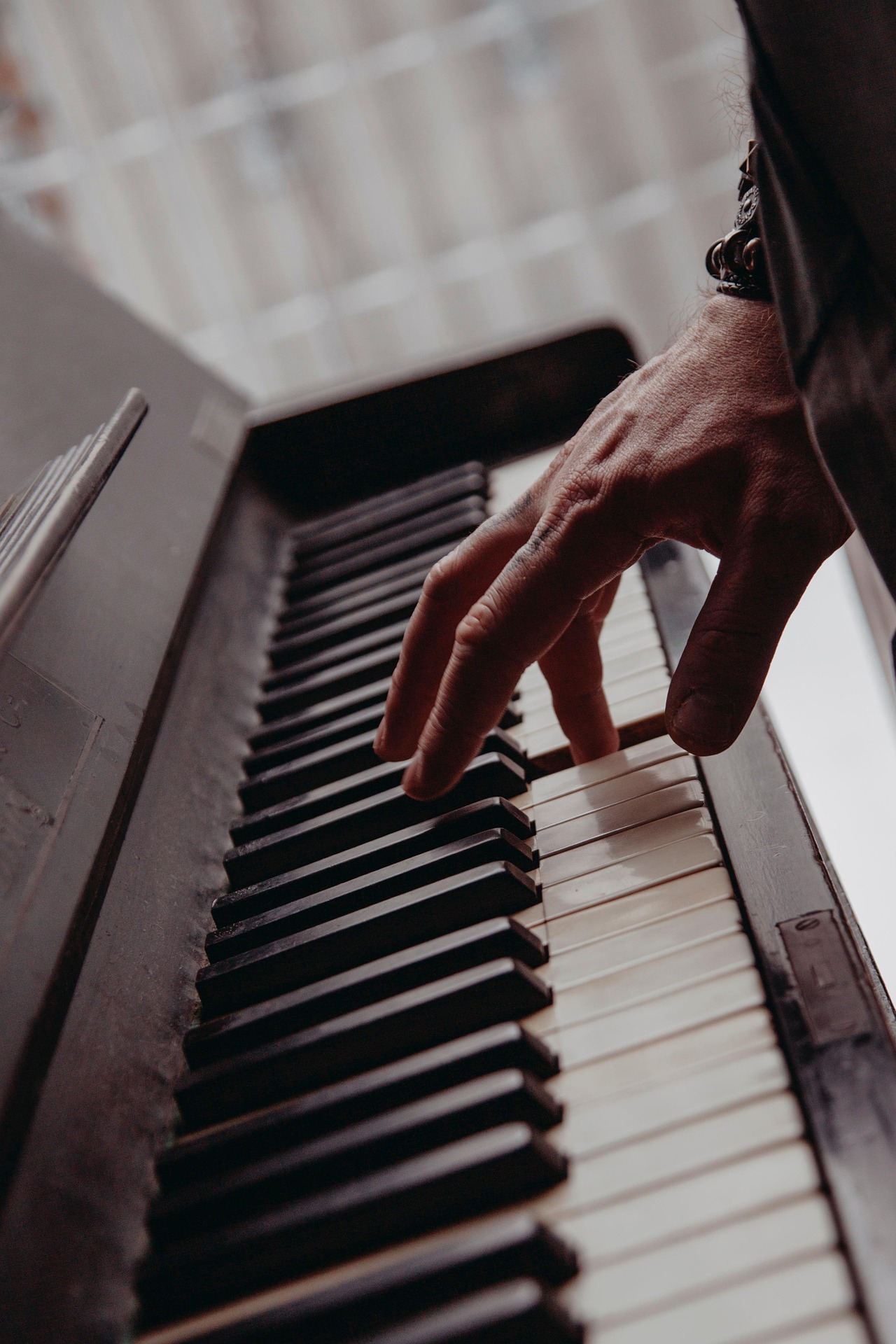
Ask most beginner pianists which hand is harder to develop, and they’ll say the left. Ask why, and they’ll usually say it’s just weaker or less coordinated. That’s part of it — but the deeper reason is that beginners consistently under-practice their left hand. This is fixable, and fixing it changes everything about how you play.

Why the Left Hand Gets Neglected
In most piano music, the left hand plays a supporting role: bass notes, chord accompaniment, rhythm patterns. The right hand carries the melody — the part that’s most obviously “the music.” Because the right hand’s part is more audibly prominent, beginners instinctively focus more attention on it.
The result: a right hand that’s practiced heavily and a left hand that’s practiced minimally. When you try to put the hands together, the left hand’s weakness becomes the bottleneck.
Fundamental Left Hand Exercises
Single Note Bass Lines
The simplest left hand role: playing single bass notes on beat 1 (or beats 1 and 3) of each measure while the right hand plays melody or chord. Practice playing steady quarter notes with your left hand — C, G, F, G — in a slow, even rhythm. The goal is evenness and consistency, not speed.
Broken Chord Patterns (Arpeggios)
Instead of playing chord notes simultaneously, play them one at a time from bottom to top: C-E-G, C-E-G. This is the foundation of the classical accompaniment style (Alberti bass) and also of ballad-style left hand patterns. Practice going up and back down: C-E-G-E-C.
Block Chord Exercise
Play complete chords in the left hand: place your pinky on the root (C), your middle finger on the third (E), and your thumb on the fifth (G). Press all three simultaneously. Practice switching between C major, F major (F-A-C), and G major (G-B-D) chords smoothly. Keep the wrist relaxed.
Octave Bass Pattern
A standard left hand pattern in many styles: play the root on beat 1, then the chord on beats 2 and 3 (in 3/4 time) or beats 2, 3, and 4 (in 4/4). This “oom-pah” pattern is the backbone of waltz, country, and early pop accompaniment.
Left-Hand-Only Practice Sessions
Once a week, dedicate an entire 20-minute practice session to left hand only. No right hand. Work on current repertoire with just the left hand — play it slow, clean, and controlled. You’ll discover exactly where the weaknesses are, and you’ll fix them faster than any hands-together practice can.
Pianoforall Teaches Both Hands From Day One
Pianoforall‘s curriculum builds left-hand technique alongside right-hand melody from early in the course — so you develop a musically balanced skill set, not a right-hand-dominant one that has to be corrected later.
See Pianoforall — $49 once →Frequently Asked Questions
Is it normal for the left hand to be much harder on piano?
Yes — especially for right-handed people. The left hand is less trained for fine motor coordination in most people’s daily lives. With deliberate, equal practice, the gap narrows significantly within a few months.
How do I make my left hand stronger for piano?
Dedicated left-hand-only practice is the most direct path. Also helpful: finger exercises (scales and arpeggios with just the left hand), and slow, careful hands-together practice where you monitor whether the left hand is keeping up precisely.
What to read next
- How to Play Piano With Both Hands
- How to Practise Piano
- Piano Chords for Beginners
- Piano Scales for Beginners
Looking for a comprehensive piano course? Read our review of the one-time course — video lessons and interactive ebooks for a single $49 payment.
Disclosure: This post contains affiliate links. If you purchase through our links, we may earn a small commission at no extra cost to you. We only recommend products we genuinely believe in.