Piano lessons cost real money. We’re talking $50–100 per hour in most cities, which adds up to $2,000–4,000 per year if you go weekly. Before committing to that, it’s completely fair to ask: are they actually worth it? Or is there a smarter way to spend that money?
I’m going to give you an honest answer — one that doesn’t assume lessons are automatically the right choice just because they’re traditional.
What Good Piano Lessons Actually Provide
First, let’s be clear about what you’re paying for when you hire a competent piano teacher:
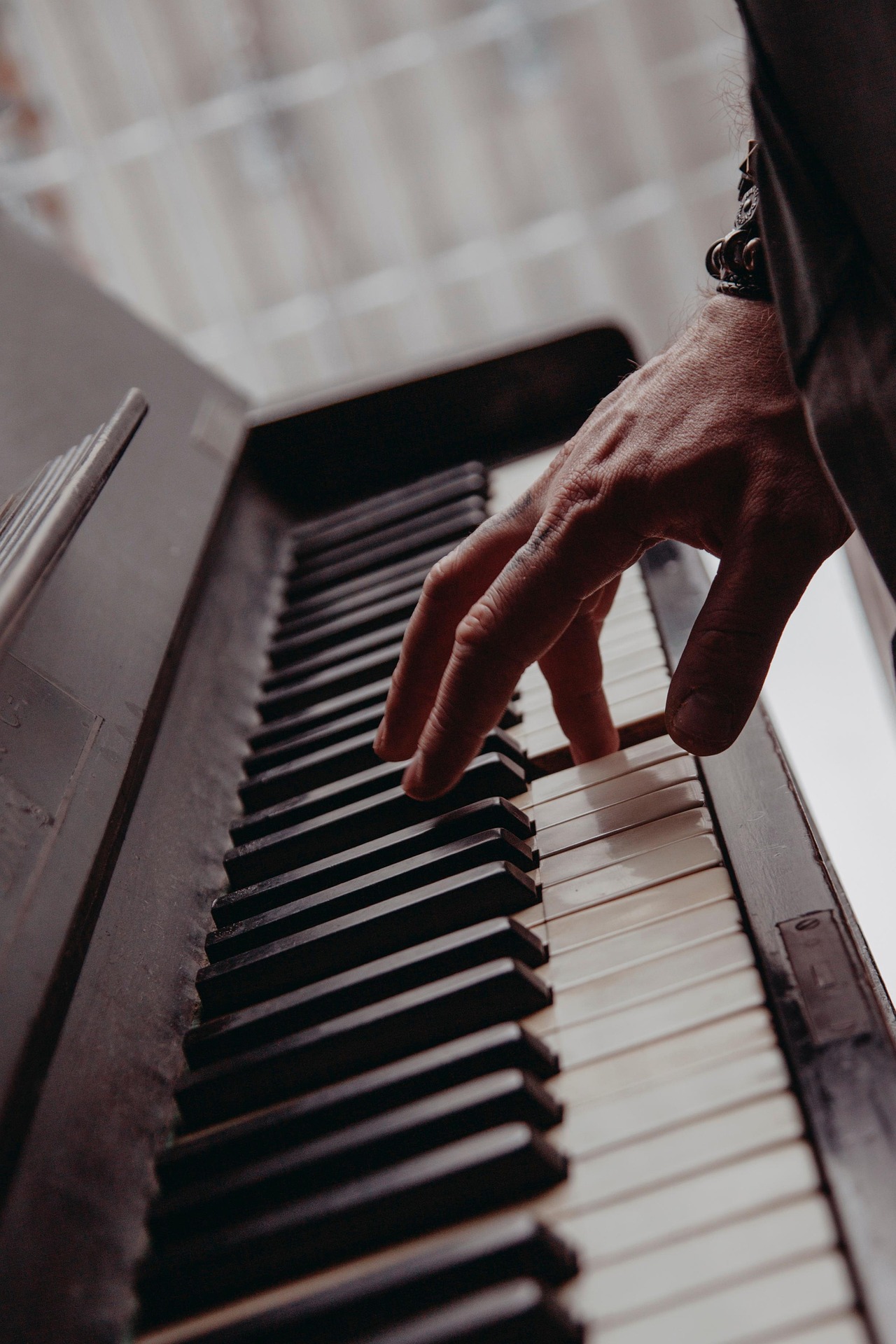
Technique correction. This is the biggest thing apps and YouTube can’t give you. A teacher watches your hands and body and catches problems — tension in the wrist, curved vs. flat fingers, collapsed knuckles, poor posture — that you literally cannot see yourself. These issues, left uncorrected, slow your progress dramatically and can cause long-term injury (tendinitis is common among pianists who practice with poor technique).
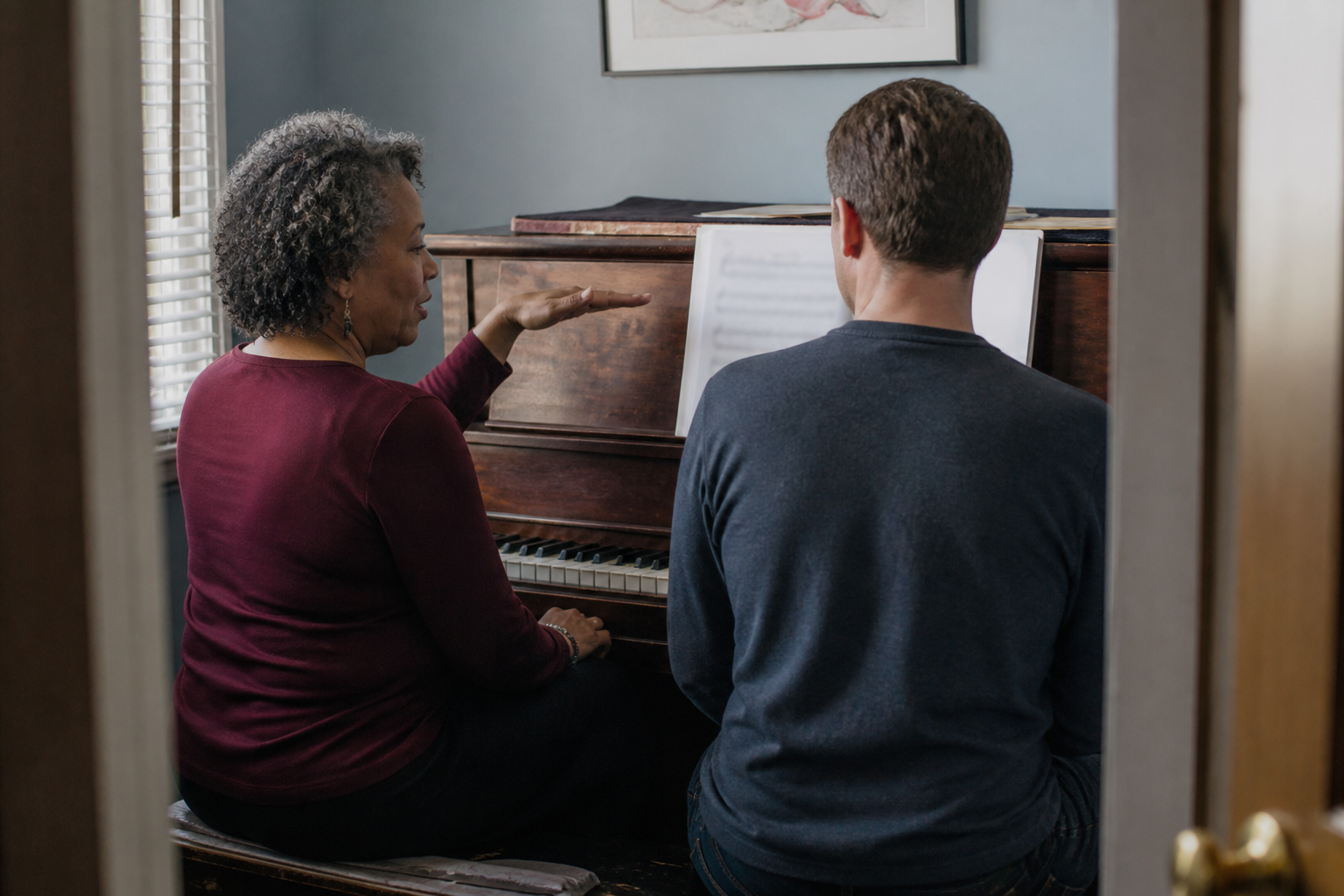
Personalised curriculum. A teacher adapts to exactly where you are and where you want to go. If you want to play blues, they can steer you that way. If you’re struggling with a specific passage, they can drill it with you. Apps follow a fixed path that may or may not suit your goals.
Musical interpretation. Learning to play the right notes at the right time is only the start. Music is about expression — dynamics, phrasing, tempo flexibility, emotional colour. A teacher helps you develop this in ways that purely technical apps don’t even attempt.
Accountability. Knowing you have a lesson on Thursday creates a reason to practice this week. For many adults, this external commitment is genuinely what keeps them consistent. Without it, practice slips.
When Lessons Are Worth Every Penny
Piano lessons are clearly worth it if any of these apply to you: you’re serious about developing classical technique, you’re working toward formal exams (ABRSM, RCM, AMEB), you’re preparing for a performance, you’ve been playing for a while and have hit a plateau you can’t get past alone, or you’ve tried self-teaching and keep developing the same bad habits.
They’re also worth it at the very beginning — the first few months — when foundational habits are being formed. Bad technique learned at the start can take years to unlearn. A teacher who sets you up correctly in months 1-3 gives you a foundation that apps can’t replicate.
When You Might Not Need Regular Lessons
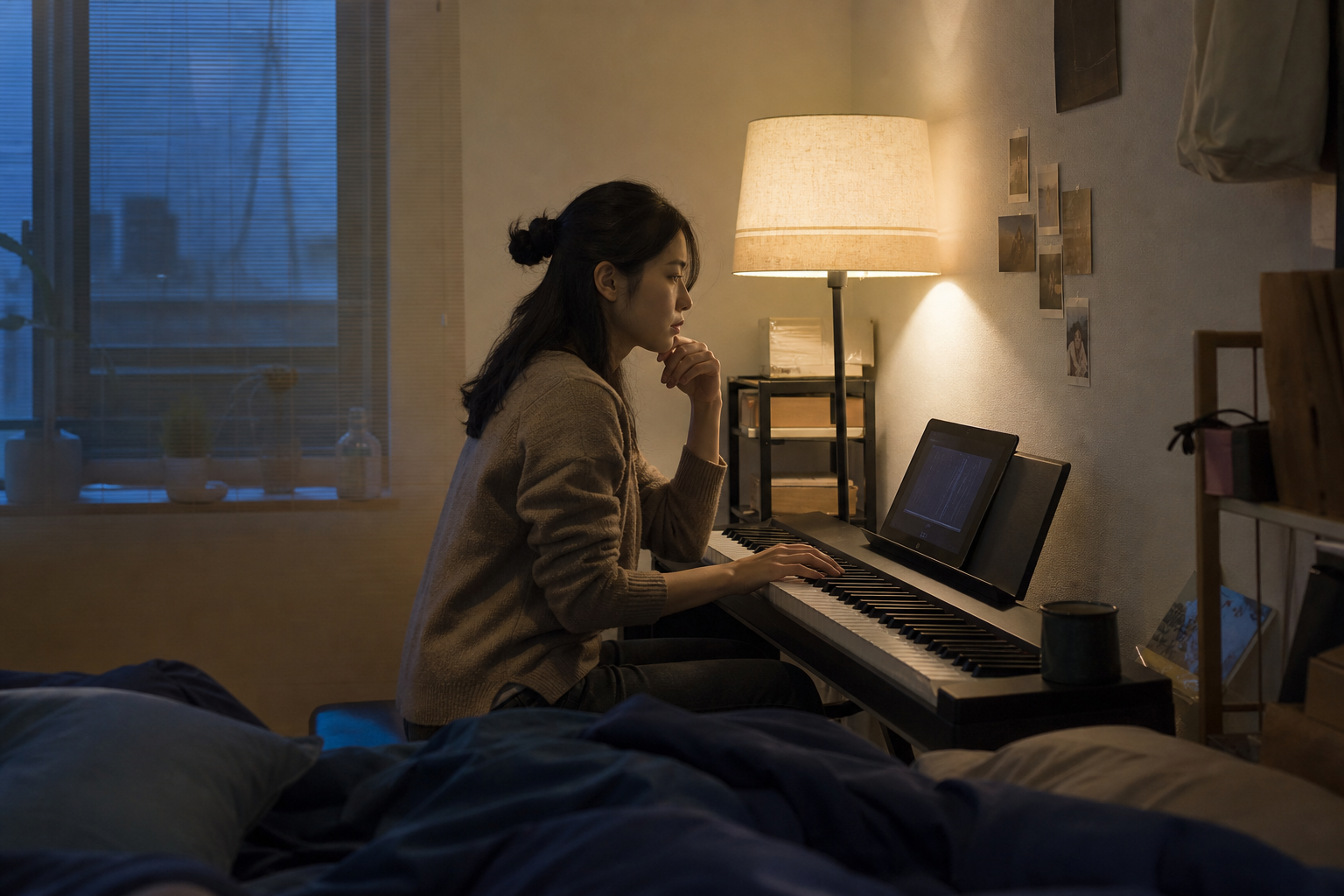
Regular weekly lessons may not be necessary if: you’re a casual learner who just wants to enjoy music at home without performance goals, you have prior musical experience (another instrument, choir singing, music theory background) that gives you a strong foundation, your budget is genuinely tight and you’re willing to be more disciplined about self-correction, or you’re using a high-quality app with MIDI feedback that catches note and rhythm errors precisely.
In these cases, the hybrid model — a quality app for daily practice plus one lesson per month for technique review — gives you the most important benefits of lessons at a fraction of the cost.
How to Find a Good Adult Piano Teacher
This matters more than people realise. Not all piano teachers are effective with adult beginners. Many trained to teach children and use approaches that don’t suit adult learning styles — they’re too slow, too focused on classical repertoire you may not care about, or not good at explaining the “why” behind what they’re asking you to do.
When searching for a teacher, look for someone who: has explicit experience teaching adult beginners, is willing to adapt repertoire to your goals, has good reviews from adult students specifically (not just children), and offers a trial lesson before a commitment.
Platforms like TakeLessons, Lessonface, and even Superprof allow you to filter by speciality and read student reviews. Use them. A good teacher makes lessons unmistakably valuable; a mediocre one makes them feel like an expensive obligation.
The Bottom Line
Are piano lessons worth it for adults? Yes — but not for everyone, not always weekly, and not from just any teacher. The clearer your goals and the more serious your commitment, the more value regular lessons provide. If you’re a casual learner who just wants to enjoy music at home, an app plus the occasional lesson is a more honest use of your money. If you’re serious, find a teacher who’s good with adults and commit to the investment.
Looking for a comprehensive piano course? Read the piano course we recommend — 10 eBooks with audio and video for a one-time price.
Disclosure: Some links on this page are affiliate links. If you purchase through them, we may earn a small commission at no extra cost to you. We only recommend products we genuinely believe in.