
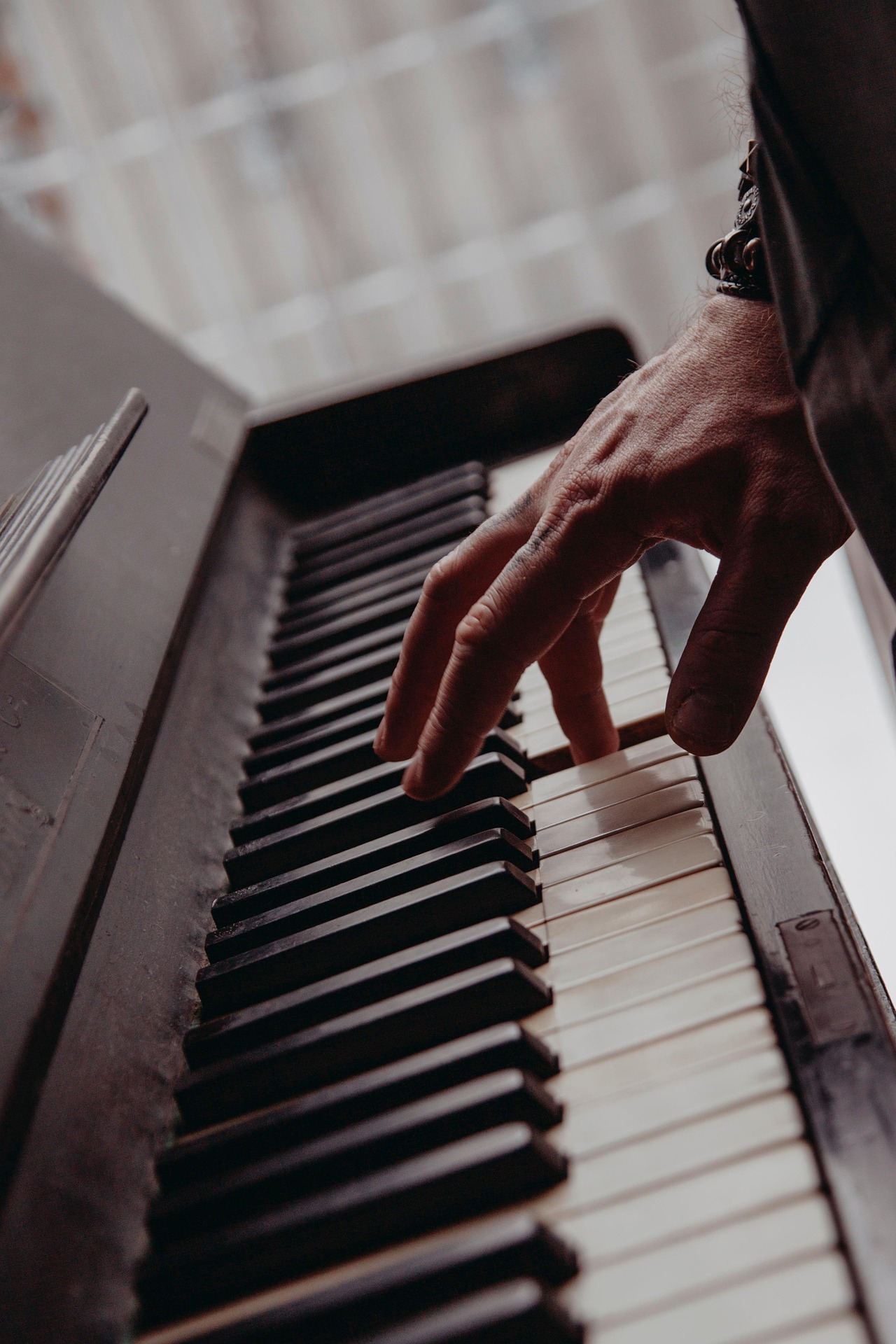
In most piano music, the right hand plays the melody and the higher notes, while the left hand handles the bass and the harmony underneath. It is not a hard rule, but it is the default that 90% of songs follow. Understanding why the hands are split this way makes coordinating them far less confusing.
The basic division of labor
Think of the keyboard as split around middle C. Everything to the right tends to be the tune — the part you would hum. Everything to the left is the foundation — bass notes and chords that give the melody something to sit on. On a grand staff, this maps neatly: the treble clef is usually your right hand, the bass clef your left.
Why this way? The melody lives in the higher register because it cuts through and our ears track it easily. The bass lives low because low notes feel like a floor. Put the melody in your left hand and the whole thing sounds muddy and upside down. That instinct is worth trusting when you are figuring out a song by ear.
What the left hand actually does
Beginners often treat the left hand as an afterthought, and it shows. The left hand is what makes playing sound full instead of thin. Its most common jobs:
- Root notes: playing the single bass note of each chord — the simplest, most useful option for a beginner.
- Block chords: holding the full three-note chord while the right hand plays melody.
- Broken chords or arpeggios: rolling the chord tones one at a time for a flowing sound, like in a ballad.
- Bass patterns: alternating root and fifth, the backbone of everything from folk to boogie.
If your left hand feels clumsy and weak — and it will at first — that is normal and fixable. Targeted work makes a huge difference; my left hand exercises for beginners are built exactly for this. Neglecting the left hand is one of the most common reasons people plateau.
Why the hands feel like they’re fighting
The real challenge of piano is not either hand alone — it is doing two different things at once. Your right hand plays a rhythm your left hand isn’t, and your brain rebels. This is completely normal and it is a skill called hand independence, not a talent you are born with.
How to build the coordination
Practice each hand separately until it is automatic, then combine slowly — painfully slowly, like a quarter of the final speed. Play one bar, hands together, until it stops feeling like a puzzle, then add the next. Do not try to power through at full tempo; you will only teach yourself the mistakes. My guides to playing with both hands and training hand independence both drill this step by step.
A useful mental trick: pick which hand “leads” a tricky spot. Usually it is the hand with the steadier rhythm. Anchor to that pulse and let the other hand fit around it, rather than trying to consciously control both at the exact same instant.
When the roles swap
The right-melody, left-harmony split is a starting convention, not a law. In more advanced playing the hands trade constantly. The left hand takes a melodic bass line in a lot of classical music; in jazz and gospel the left hand plays rich chords while the right improvises. Sometimes a melody note is so low it belongs to the left hand even though it is the tune.
You do not need to worry about those cases yet. Master the default first — right hand sings, left hand supports — and the exceptions will make sense when you meet them. When you play chords with both hands together and want them to lock in rather than clash, playing piano chords with both hands covers how to voice them so nothing sounds muddy.
Frequently asked questions
Does the left hand always play chords?
Usually it plays either the bass note or the chord, yes. But it can also play melody, arpeggios, or bass patterns. Chords are just the most common beginner job because they are simple and sound full.
Should I practice hands separately or together?
Both, in order. Learn each hand alone until it is automatic, then combine very slowly. Jumping straight to hands-together at speed is the fastest way to get frustrated.
Why is my left hand so much weaker?
For most people it is simply less used in daily life, so it starts behind. It catches up quickly with dedicated exercises. Give it equal practice time and the gap closes within weeks.
This post contains affiliate links. If you buy through them, we may earn a small commission at no extra cost to you.