The barrier to starting piano is lower than most people think. You don’t need an acoustic grand piano, a professional-grade digital instrument, or a room full of accessories. Here’s what actually matters — and how to get started without overspending on things that don’t move the needle.
The Only Non-Negotiable: A Keyboard
You need a keyboard. Everything else is optional in the early stages. The keyboard should have at least 61 keys — this covers the range of virtually all beginner piano music. 76 is better; 88 is ideal and eventually worth having, but not required to start. Beyond key count, the single most important feature is key action.
Weighted vs Unweighted Keys: Why It Matters
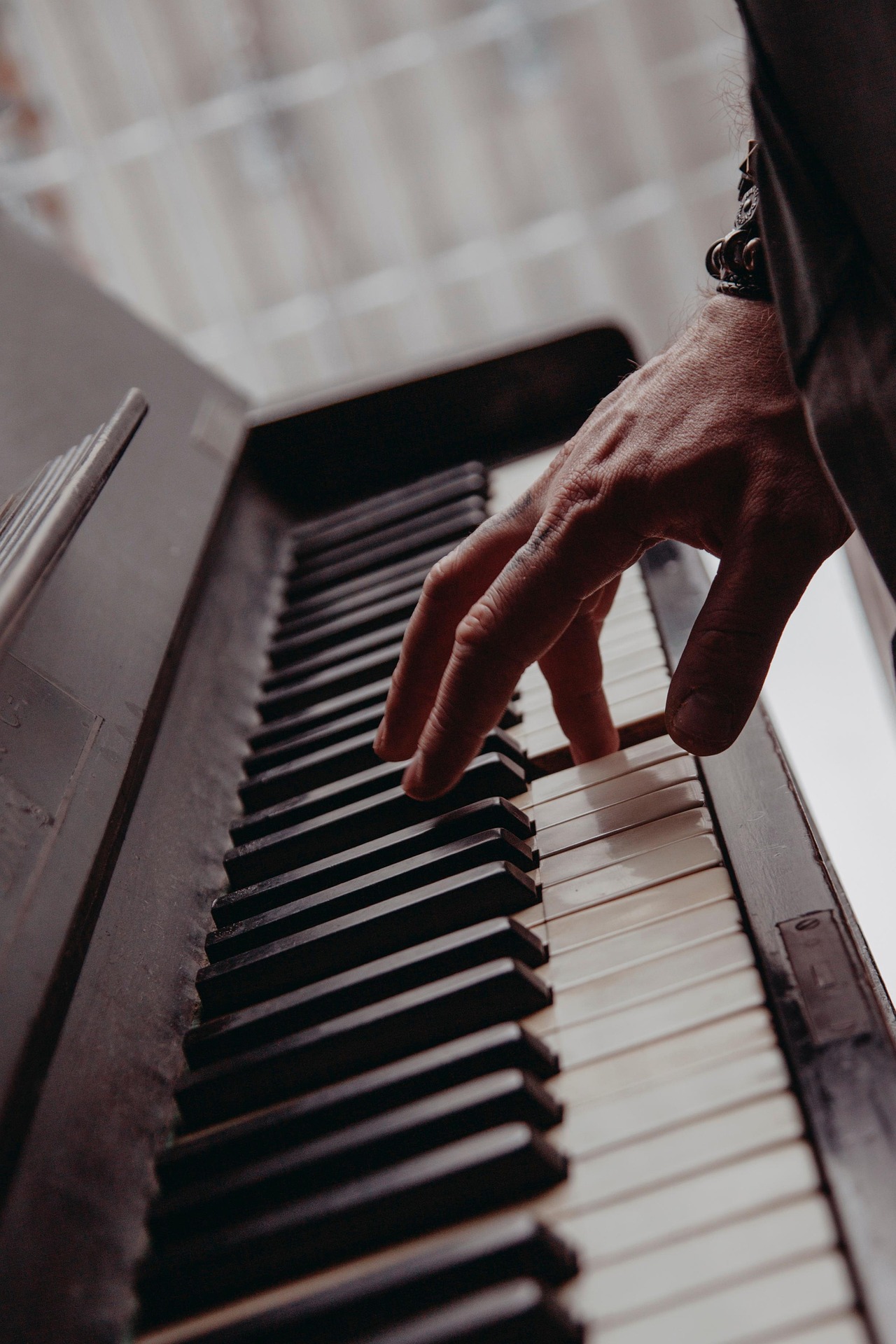
Unweighted keys (like a cheap synthesizer or MIDI controller) feel like pressing buttons. Weighted keys feel like a real piano — they push back, require finger strength to depress, and develop the kind of touch control that matters for actual piano playing.
If you practice on unweighted keys for six months and then sit down at a real piano, your hands will feel wrong. The muscles haven’t developed correctly, and the touch sensitivity is completely different. This is the one equipment compromise that genuinely costs you later.
Semi-weighted is better than nothing. Fully weighted (sometimes called “hammer action”) is the standard to aim for. Graded hammer action — heavier in the bass, lighter in the treble, like a real piano — is the ideal for serious practice.
Keyboard Buying Guide by Budget
| Budget | Keyboard Type | Recommended Models | Good For |
|---|---|---|---|
| Under $150 | Semi-weighted, 61 keys | Casio CT-S series (CT-S200 and up), Yamaha PSR-E series | Absolute beginners, testing interest |
| $150–$300 | Semi-weighted, 88 keys | Alesis Recital | Committed beginners |
| $300–$500 | Fully weighted, 88 keys | Yamaha P-45, Casio CDP-S110, Roland FP-10 | Serious beginners and intermediate |
| $500–$800 | Graded hammer, 88 keys | Yamaha P-225, Roland FP-30X, Casio CDP-S160 | Long-term learning, advancing players |
| $800+ | Premium weighted, 88 keys | Roland FP-90X, Kawai ES120 | Advanced players, near-acoustic feel |
Check current prices on Amazon:
Casio CT-S200 → — the cheapest honest starting point
Casio CDP-S160 → — cheapest route to weighted 88 keys
Yamaha P-45 →
Roland FP-10 →
Yamaha P-225 →
For most adult beginners who are committed to learning, the $300–$500 range is the sweet spot. You’ll get a fully weighted 88-key instrument that develops proper technique and won’t become a limiting factor until you’re well into intermediate playing.
What Else Do You Actually Need?
Keyboard Stand
If your keyboard doesn’t come with legs, you need a stand. An X-style keyboard stand ($20–$40) works fine for beginners. The important thing is that the keyboard is at the right height — sitting at the piano, your forearms should be roughly parallel to the floor with elbows at about 90 degrees. If the stand isn’t adjustable, check the height before buying.
Bench or Chair
Posture matters. Playing hunched over a laptop chair or sitting on a stool that’s the wrong height builds bad habits and causes physical tension that slows learning. An adjustable piano bench ($40–$80) solves this cleanly. If you’re using a regular chair, make sure it’s the right height — same rule applies: forearms roughly parallel to the floor.
Headphones
If you share your living space or want to practice at night, headphones are genuinely useful. Any decent pair will work — you don’t need studio monitors or audiophile equipment. A $30–$50 pair of closed-back headphones does the job. Many digital pianos have a headphone jack; plug in and you can practice at any hour.
Sustain Pedal
The sustain pedal (the rightmost pedal on an acoustic piano) is used in a significant percentage of piano music. Many entry-level digital pianos come with one; if yours doesn’t, a basic sustain pedal costs $15–$25. It’s worth having from early on so you get comfortable with its use before you actually need it.
Sheet Music Stand or Tablet Holder
If you’re reading music from paper or a tablet, you need somewhere to put it at eye level. Most digital pianos have a small music rest built in — adequate for sheet music. If you use a tablet for digital scores or online lessons, a dedicated tablet stand ($15–$30) gives you better positioning flexibility.
What You Don’t Need (Yet)
Several things are commonly marketed to beginners that aren’t necessary and can actually be a distraction:
- A metronome app: Your phone already has several free ones. You don’t need a hardware metronome.
- Finger strengtheners: These gadgets don’t replicate piano technique and are largely useless. Practice at the piano builds finger strength far more effectively.
- Beginner note stickers: Useful for five minutes, counterproductive for learning to read music independently. Avoid.
- Multiple lesson subscriptions: One good structured method is better than five mediocre ones running simultaneously.
- A recording interface: Interesting later; irrelevant for beginners.
The Complete Beginner Setup (Budget-Conscious)
If you want a complete, capable learning setup that will serve you for years without overspending, here’s the practical combination:
- Keyboard: Casio CDP-S110 (88 fully weighted keys) — ~$290
- Stand: X-style keyboard stand — ~$25
- Bench: Adjustable piano bench — ~$50
- Sustain pedal: Included with most models; if not, ~$20
- Headphones: Basic closed-back pair — ~$35
- Course: Pianoforall — ~$49
Total: ~$430. Everything beyond this is enhancement, not requirement.
Why the Course Matters as Much as the Keyboard
A good keyboard gets you to the piano. A good curriculum gets you actually playing music. Many beginners invest in decent equipment and then cobble together random YouTube videos — which produces slow, frustrating progress because there’s no structured progression.
Pianoforall is specifically designed for adult self-learners: chord-first approach, online video lessons plus interactive ebooks, covering everything from beginner chords to blues, jazz, classical, and improvisation. One-time cost, permanent access — less than a month of most app subscriptions.
Frequently Asked Questions
Do I need an acoustic piano to learn properly?
No. A fully weighted digital piano develops essentially the same technique for beginner and intermediate levels. The differences between digital and acoustic become meaningful mainly at advanced levels. For most learners, a quality digital keyboard is the more practical and cost-effective choice.
How many keys do I need to start learning piano?
61 keys covers virtually all beginner piano music. 76 is better for intermediate repertoire. 88 is standard for a full-range piano and worth having once you’re committed, but not required from the start. Don’t let a 61-key instrument stop you from beginning.
Is a cheap keyboard okay to start with?
Depends on what “cheap” means. Unweighted keys under $100 will hold you back technically. A semi-weighted or weighted keyboard in the $150–$300 range is a workable starting point. The main thing to avoid is practicing exclusively on unweighted keys — the technique transfer to a real piano is poor.
What’s the best beginner piano keyboard?
For budget-conscious beginners: the Casio CDP-S110 or Yamaha P-45 are consistently recommended — both weighted, reliable, and in the $250–$350 range. For slightly more budget: the Roland FP-30X has excellent key action and is worth the extra investment if you’re committed to learning seriously.
Do I need piano lessons or can I use a self-study course?
A good teacher accelerates learning and catches technical errors early. But self-study with a structured course is entirely viable for motivated adults — many competent pianists learned without formal lessons. The key is using a complete, progressive curriculum rather than patching together random free content.
What to Read Next
- Can You Learn Piano Without a Real Piano?
- Best Online Piano Lessons in 2026
- Pianoforall Review: Honest Assessment
- Learning Piano as an Adult: What Actually Works
Disclosure: As an Amazon Associate I earn from qualifying purchases. This post contains affiliate links. If you purchase through our links, we may earn a small commission at no extra cost to you.