

Piano Marvel doesn’t get talked about as much as Simply Piano or Flowkey, partly because it’s been around longer and partly because its target audience leans more towards classical learners and teachers. But for a certain type of adult beginner — the kind who actually wants to read music well rather than just chord-strum their way through pop songs — it might be the most undervalued option on the market. Here’s an honest assessment based on the vendor’s information and public feedback.
Piano Marvel is the closest thing online to a strict, structured piano teacher: it grades your sight-reading and won’t let you skip the fundamentals. If that discipline is what you’re after, it’s one of the best on the market. But if you’d rather sit down with a basic keyboard and start playing real chord progressions this week, without a MIDI setup and without a monthly renewal, I’d choose Pianoforall instead. You pay once and learn on your own schedule.
Quick verdict: Piano Marvel is the closest thing online to having a strict but supportive piano teacher in your home. If you respond well to structure, clear feedback and repetition, you’ll progress faster on this than on any of the flashier apps. If you want a frictionless dopamine drip, look elsewhere.
What Piano Marvel actually is
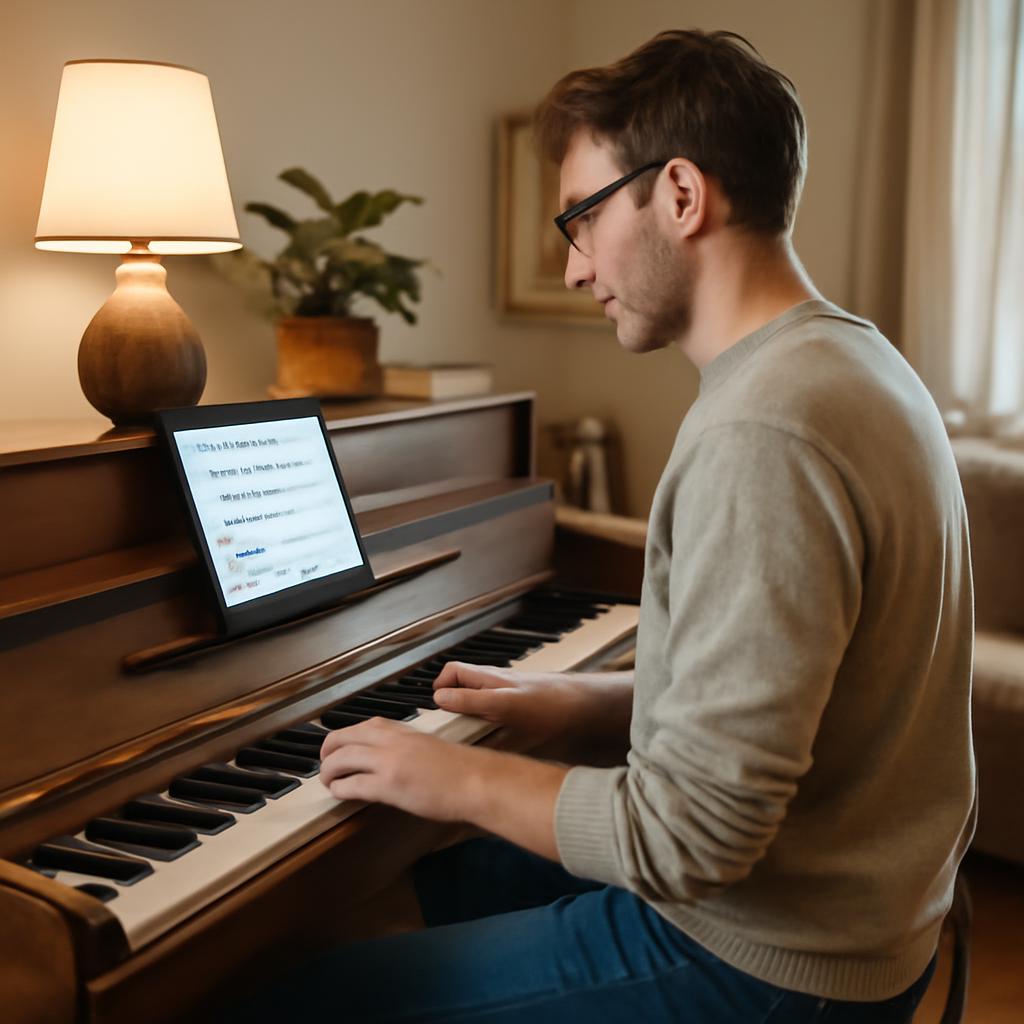
Piano Marvel is a desktop and tablet application (no real mobile experience — it’s not designed for phones) that walks adult beginners through structured curriculum-based piano learning. The app pairs with a MIDI keyboard, listens to what you play, and grades you on accuracy and timing.
The hallmark feature is “SASR” — Standard Assessment of Sight Reading. It measures your reading ability and tracks improvement over time. For learners who care about actually being able to play unfamiliar music, this is the killer app.
Pricing in 2026 is around $15.99 per month or roughly $130 a year, with a 30-day free trial. There’s also a teacher edition aimed at private instructors using it with their students.
Piano Marvel is about $15.99 a month, or roughly $130 for the year, and it keeps billing for as long as you use it. It also assumes you have a MIDI-capable keyboard or digital piano — without one, you lose the accuracy grading that makes the app worth using. Pianoforall works the other way round: about $49 once, on any basic keyboard, and it stays yours.
It’s a trade-off, not a free lunch. Pianoforall doesn’t grade your sight-reading or listen for wrong notes — it’s a self-paced video course with downloadable ebooks, so it’s a more self-directed experience. What you get instead is chords, blues, jazz and improvisation from day one, and 60 days to try it with a money-back guarantee if it isn’t for you.
$576
$390
$49
What works well
The curriculum is properly sequenced
Piano Marvel doesn’t try to make you feel good in the first lesson. It teaches you what comes next based on what you’ve actually mastered, not what’s exciting. That sounds boring on paper. That groundwork is what lets you play things other beginner apps simply don’t prepare you for.
The lessons go from absolute beginner (“here’s middle C, here’s how to read this whole note”) through proper classical and contemporary technique, with method-style books built into the app. It’s the most “real piano lesson” experience of any digital platform we have looked at.
Sight reading practice that actually works
Most apps neglect sight reading because it’s hard and not fun. Piano Marvel makes it central. The SASR test gives you a baseline, then you train with progressively harder unseen music. Six months in you’ll notice you can actually pick up new sheet music and play it slowly, which is the entire point of being able to read music.
Accurate, fair feedback
The grading is strict but consistent. The app awards you a “trophy” when you play a piece accurately enough — and getting trophies feels earned, not given. This matters for adults who are tired of apps that hand out “perfect” ratings for sloppy playing.
The repertoire is broader than people expect
Yes, classical is heavily represented. But Piano Marvel also has hymns, jazz, contemporary pieces, holiday music and pop arrangements. The library is surprisingly diverse, and many pieces have multiple difficulty levels so you can grow into them.
Where it falls short
The interface is from another decade
Let’s be honest — Piano Marvel looks like a 2014 LMS. The UI works, but it’s not slick, and the design language feels conservative compared to the Simply Pianos and Flowkeys of the world. If aesthetics matter to your motivation, this will grate.
Slower onboarding
You won’t be playing a recognisable song in your first session. Piano Marvel takes the position that fundamentals come first, and that’s correct pedagogically — but it’s a slower dopamine curve than apps that hand you “Let It Be” with two fingers in fifteen minutes.
Heavy on classical, lighter on modern pop
If your motivation for learning is to play current pop hits exactly like the recording, Piano Marvel isn’t optimised for you. It’ll teach you the skills to learn those songs eventually, but it won’t put them front and centre.
The mobile experience is essentially nonexistent
You really need a tablet or laptop. The phone version is functional only as a quick supplement.
Who should choose Piano Marvel
Piano Marvel makes most sense if you:
- Want to learn to read music properly, not as an afterthought.
- Have piano-teacher-style discipline and don’t need an app to gamify everything.
- Plan to play classical or church music as part of your repertoire.
- Are willing to spend a year or more on the platform without expecting instant gratification.
- Have a MIDI-capable keyboard or digital piano.
For self-disciplined adults who want long-term real skill, this is one of the strongest options out there.
Who should pick something else
- If you primarily want pop songs played by ear/chord: Pianoforall is faster and cheaper.
- If you want a slick, gamified experience: Simply Piano feels modern and fun.
- If you mainly want a beautiful classical-piece library: Flowkey looks gorgeous and has good pieces but lighter pedagogy.
- If you only have a phone: skip Piano Marvel — it’s not built for that form factor.
How Piano Marvel compares head to head
Piano Marvel vs Simply Piano: Simply Piano is the pretty, friendly app. Piano Marvel is the serious teacher. Simply Piano gets you playing first; Piano Marvel makes you a better musician faster (assuming you stick with it). For deep skill, Piano Marvel wins. For first-month enjoyment, Simply Piano wins.
Piano Marvel vs Pianoforall: Different paths. Pianoforall is a one-time-purchase video course with downloadable ebooks teaching chord-based playing. Piano Marvel is a subscription with structured curriculum focused on reading and classical technique. If you want to play pop songs by chord this weekend, Pianoforall. If you want serious piano skill in 12-24 months, Piano Marvel.
Piano Marvel vs Flowkey: Flowkey has a much prettier interface and a cleaner song library. Piano Marvel has stronger pedagogy and serious sight-reading training. Pick on what matters to you.
Our comprehensive comparison guide walks through every option side by side.
Practical tips before you start
- Take the SASR sight-reading test on day one. It gives you a baseline you can compare against later, and that progress arc is one of the most motivating parts of the app.
- Commit to the curriculum order. Don’t skip ahead — the structure earns its keep over weeks, not days.
- Use a real digital piano or weighted keyboard if possible. Piano Marvel works on cheap unweighted keyboards too, but the technique work translates better with weighted keys.
- Plan for 20–30 minute sessions, not marathon ones. The app is designed for steady progress over time.
Which Should You Buy First?
Most comparisons treat this as an either/or decision you make once. In practice it’s a sequence, and the order matters more than the choice — because one of these two is refundable and the other is a subscription you have to remember to cancel.
Start with the one that costs least to be wrong about. Pianoforall is around $49 once, with a 60-day money-back guarantee through ClickBank. Two months is long enough to find out the thing that actually matters at the start, which isn’t “is this the most rigorous method?” but “am I going to sit down at the piano four times a week?” If the answer is no, you get your money back. If you’d started on Piano Marvel’s annual plan instead, you’d be locked into a year of billing for lessons you’re not doing.
Then add Piano Marvel only if you can name what’s missing. After a couple of months of chord-first practice you’ll know whether the gap is motivation or precision. If what you actually want is someone grading your sight-reading and refusing to let you skip ahead, that’s exactly what Piano Marvel is built for, and it’s worth the subscription. If you’re aiming at classical or church repertoire and need a formal reading test like SASR, that’s a good reason too. “I want the app with the trophies” is not.
When to skip Pianoforall and go straight to Piano Marvel. If you already read music adequately and want serious, graded sight-reading practice, if you’re a teacher evaluating software for students, or your goal is specifically classical or church repertoire on a weighted keyboard — get the Piano Marvel trial and don’t overthink it.
What we wouldn’t do is buy both at once. They pull in different directions — one by ear and chords, the other by notation and grading — and splitting practice time across both is the fastest way to make slow progress at each.
Decided already? Get Pianoforall — about $49 once, 60-day guarantee →
Or read the full review first if you want the detail on what is inside.
The bottom line
Piano Marvel is the most pedagogically serious piano app on the market. It’s not the prettiest, it’s not the friendliest, and it’ll never go viral on TikTok. But for an adult who actually wants to play piano well — properly, repeatably, with the ability to pick up new music and figure it out — it’s the closest thing to having a real teacher beside you, at a fraction of the cost.
If you’re choosing between this and the trendier options, ask yourself: do I want to feel good in week one, or do I want to be playing real music in year one? If the answer is the second, Piano Marvel is your best friend. If it’s the first, pick Simply Piano and be honest with yourself about the tradeoff.
If you want a graded, teacher-style path to real sight-reading and classical technique, Piano Marvel remains a serious choice. If you’d rather start playing real chord progressions this week, pay once, and keep the course whether or not you stick with a MIDI keyboard, I’d choose Pianoforall.
If the dated interface is the dealbreaker
Piano Marvel earns its place on sight reading, but plenty of adults bounce off the interface. If you want the structure without the software, Pianoforall takes the opposite approach entirely: a video course with downloadable interactive ebooks, chord-first, no subscription and nothing to renew. About $49 once with a 60-day money-back guarantee. Price approximate at the time of writing.
See Pianoforall →Disclosure: this review contains affiliate links. If you sign up through one of our links we may earn a small commission at no extra cost to you. How we reviewed this (updated 16 October 2026): this page is based on the vendor’s official information, pricing and policies and on public user feedback. We have not hands-on tested Piano Marvel.