
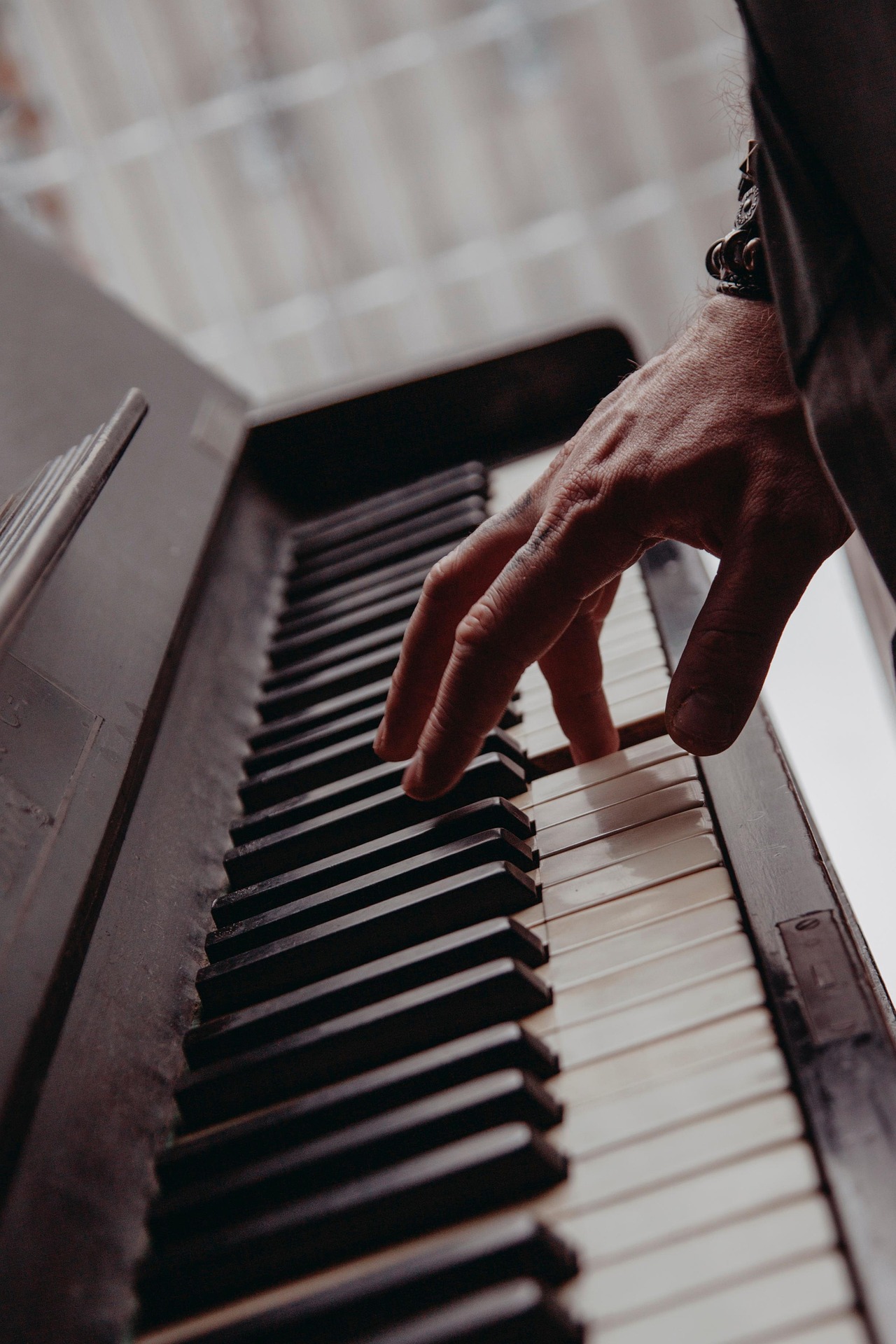
A good practice environment makes a real difference. Not because you need anything fancy — you don’t — but because the setup around your instrument affects how often you sit down to play, how long you stay, and how focused you are when you’re there. Here’s how to create a practice space that works.
Instrument placement: make it accessible
The single most important factor is how easy it is to start practicing. If your piano is in a room you rarely enter, or if it’s covered with stuff that needs to be moved, you’ll practice less. Friction kills consistency.
Put your instrument somewhere you pass regularly — a living room, a home office, a bedroom corner. Leave the keyboard uncovered and the bench at the right height. The easier it is to sit down and start, the more likely you are to do it.
Seating and posture setup
The right bench height matters more than most beginners realize. Your forearms should be roughly parallel to the floor when your hands rest on the keys, with your elbows at approximately the same level as the keyboard. Sitting too high causes you to angle your wrists down; too low causes tension in your shoulders.
A piano bench or adjustable stool is better than a regular chair. Dining chairs and office chairs are usually too high and often have armrests that get in the way.
Lighting
If you’re reading sheet music, make sure the music stand is well lit. Eye strain from reading in poor light adds unnecessary fatigue to an already demanding task. A simple desk lamp angled toward the music stand is usually enough. Avoid glare on the music directly.
Reduce distractions
Put your phone on silent or in another room during practice. Interruptions break concentration and make short sessions feel even shorter. If you’re using an app or following a course on a tablet, disable notifications before you start.
Headphones for quiet practice
If you’re on a digital piano and have household members or neighbors, a good pair of closed-back headphones transforms your practice options. You can play at any time of day or night without disturbing anyone, and you can hear yourself clearly without external noise.
You don’t need expensive headphones — a $30–$50 pair of closed-back headphones works fine for piano practice. Audio-Technica ATH-M20x and Sony MDR-7506 are popular beginner choices.
Keep your materials organized
Sheet music, method books, and course materials should be within reach of the piano. If you have to search for your practice book every session, it adds friction and interrupts flow. A simple folder or small shelf next to the instrument is enough.
If you’re following an online course like Pianoforall, keeping the eBooks or a tablet propped on your music stand makes it easy to follow along without leaving the bench.
This post contains affiliate links. If you purchase through them, we may earn a small commission at no extra cost to you.